Gfrp Rebar
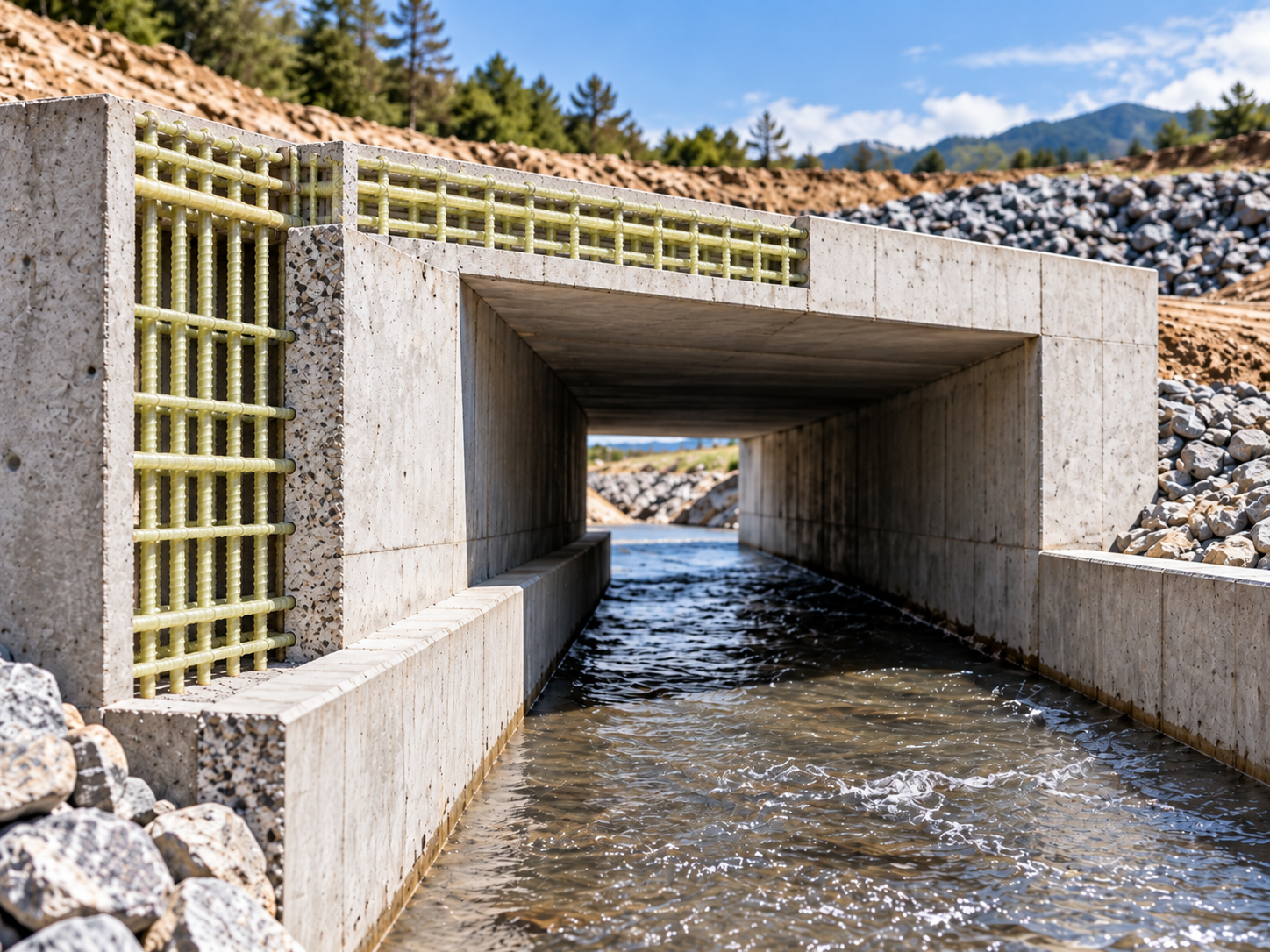
Drainage Structures
GFRP rebar is a durable reinforcement solution for drainage structures exposed to moisture, groundwater and aggressive environments. Unlike steel, it does not rust or corrode, helping improve the service life of concrete drains, culverts, channels and stormwater systems. Its lightweight nature also makes transportation, handling and installation easier on site. It provides reliable reinforcement for infrastructure requiring long-term performance in continuously wet conditions.
- Corrosion Resistant: Suitable for continuously wet environments.
- Long Service Life: Helps reduce corrosion-related deterioration.
- Lightweight: Easier to transport and install.
- Low Maintenance: Helps reduce long-term maintenance needs.
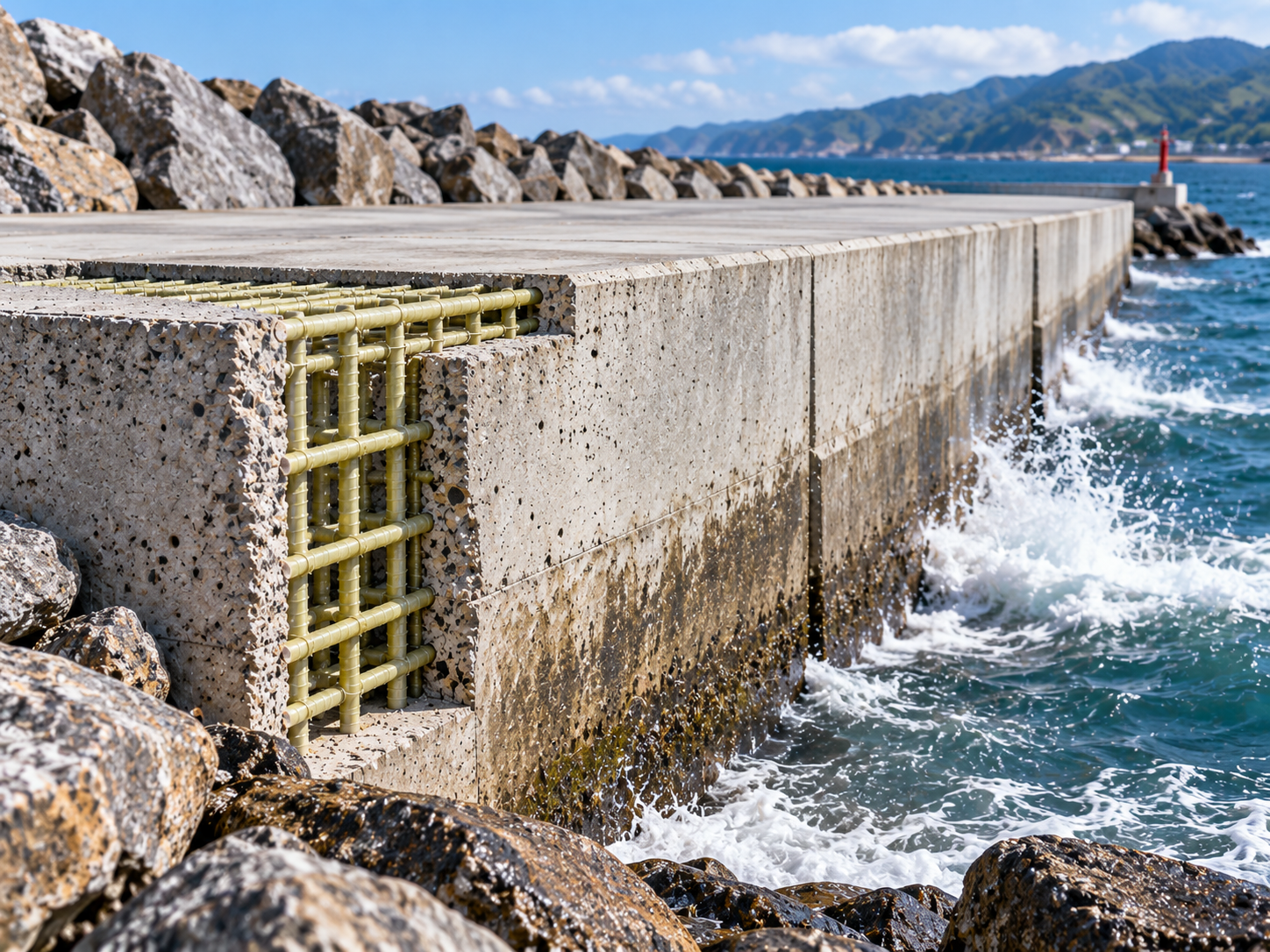
Marine & Coastal Construction
GFRP rebar is well suited for marine and coastal structures exposed to seawater, salt spray and highly corrosive environments. Unlike conventional steel reinforcement, it does not rust when exposed to chlorides, helping protect reinforced concrete from corrosion-related deterioration. Its lightweight construction also simplifies transportation and handling at coastal project sites. It provides a durable reinforcement option for seawalls, jetties, docks and other marine infrastructure.
- Saltwater Resistant: Performs well in chloride-rich environments.
- Corrosion Free: Does not rust when exposed to seawater.
- Long Service Life: Supports durable coastal infrastructure.
- Lightweight: Easier to transport and handle on site.
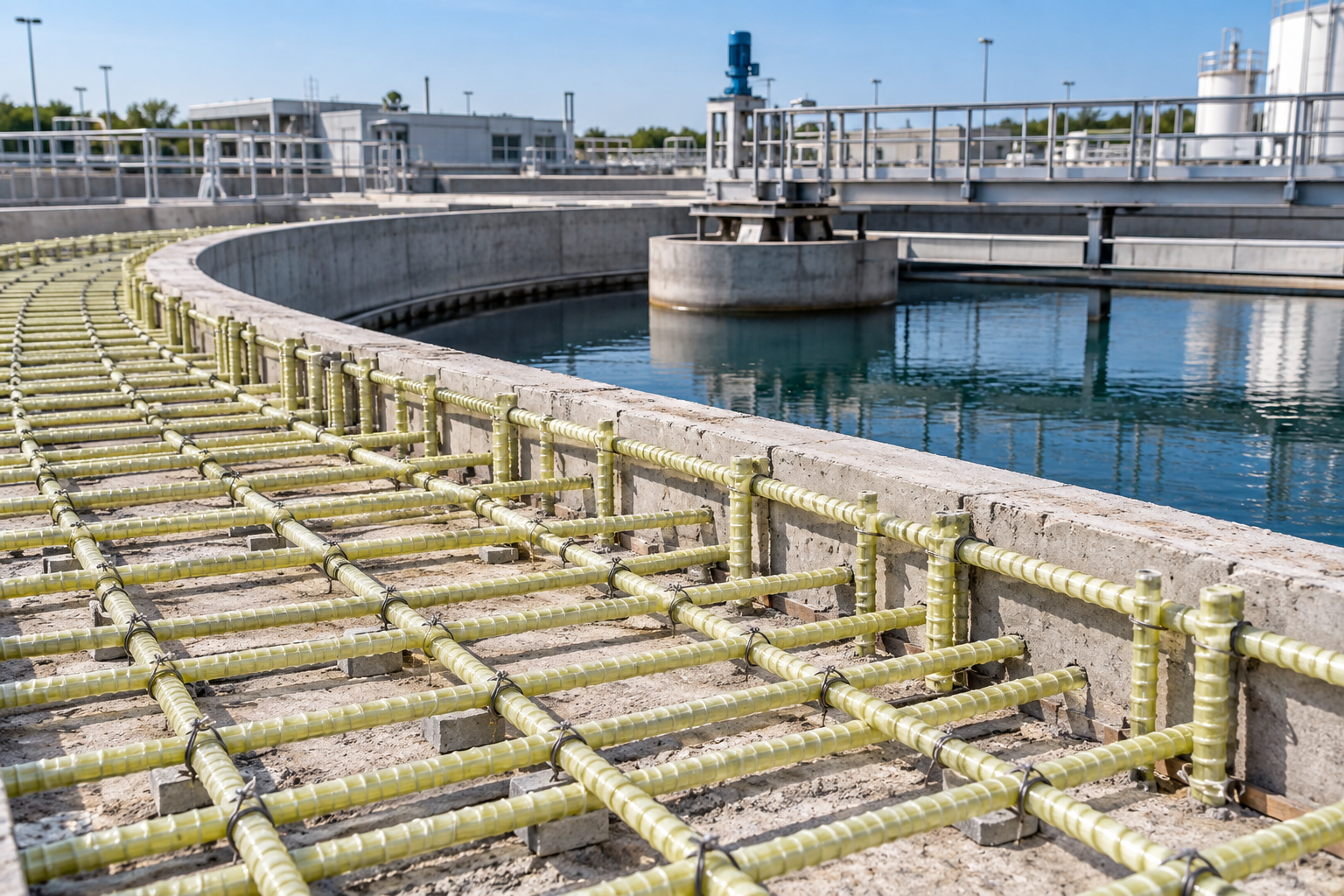
Water Treatment Plants
GFRP rebar is suitable for water treatment facilities where reinforced concrete is regularly exposed to moisture, chemicals and aggressive operating conditions. Its non-corrosive properties help protect tanks, channels, basins and other concrete structures from reinforcement-related deterioration. The lightweight material is also easier to transport, position and install during construction. It provides dependable reinforcement for water-management infrastructure requiring durability and reduced maintenance.
- Corrosion Resistant: Suitable for constant moisture exposure.
- Chemical Resistant: Performs well in many aggressive environments.
- Low Maintenance: Helps reduce corrosion-related repairs.
- Lightweight: Simplifies handling and installation.
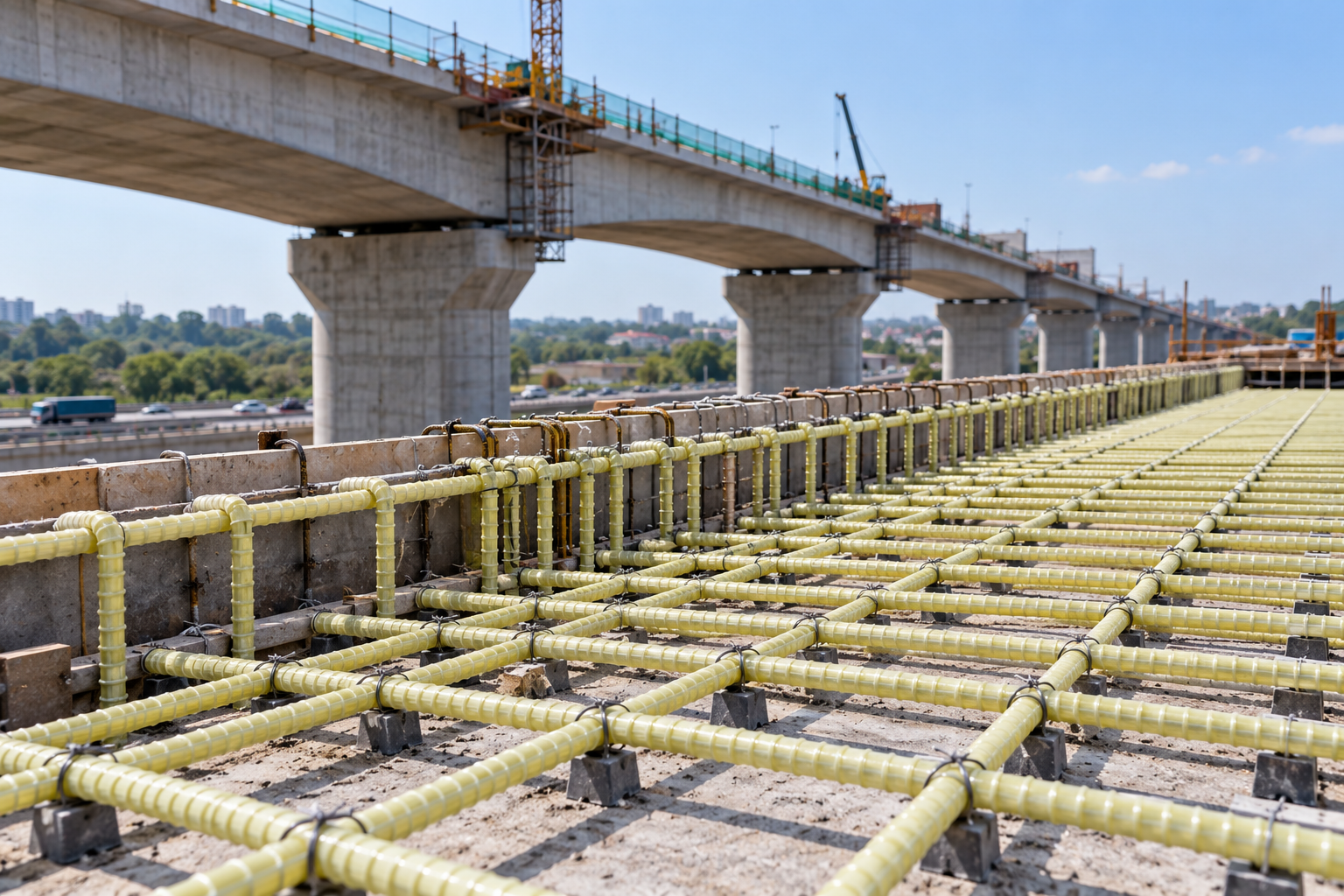
Bridges & Flyovers
GFRP rebar can be used in bridge and flyover components where corrosion resistance and long-term durability are important. It is particularly useful in concrete elements exposed to moisture, de-icing salts or other aggressive environmental conditions that can accelerate steel corrosion. Its high tensile strength and lightweight nature can also simplify transportation and installation on construction sites. It provides a durable reinforcement solution for selected bridge decks, barriers and infrastructure components.
- Corrosion Resistant: Suitable for demanding outdoor environments.
- High Tensile Strength: Provides effective reinforcement performance.
- Lightweight: Easier to handle during construction.
- Durable: Helps reduce corrosion-related deterioration.
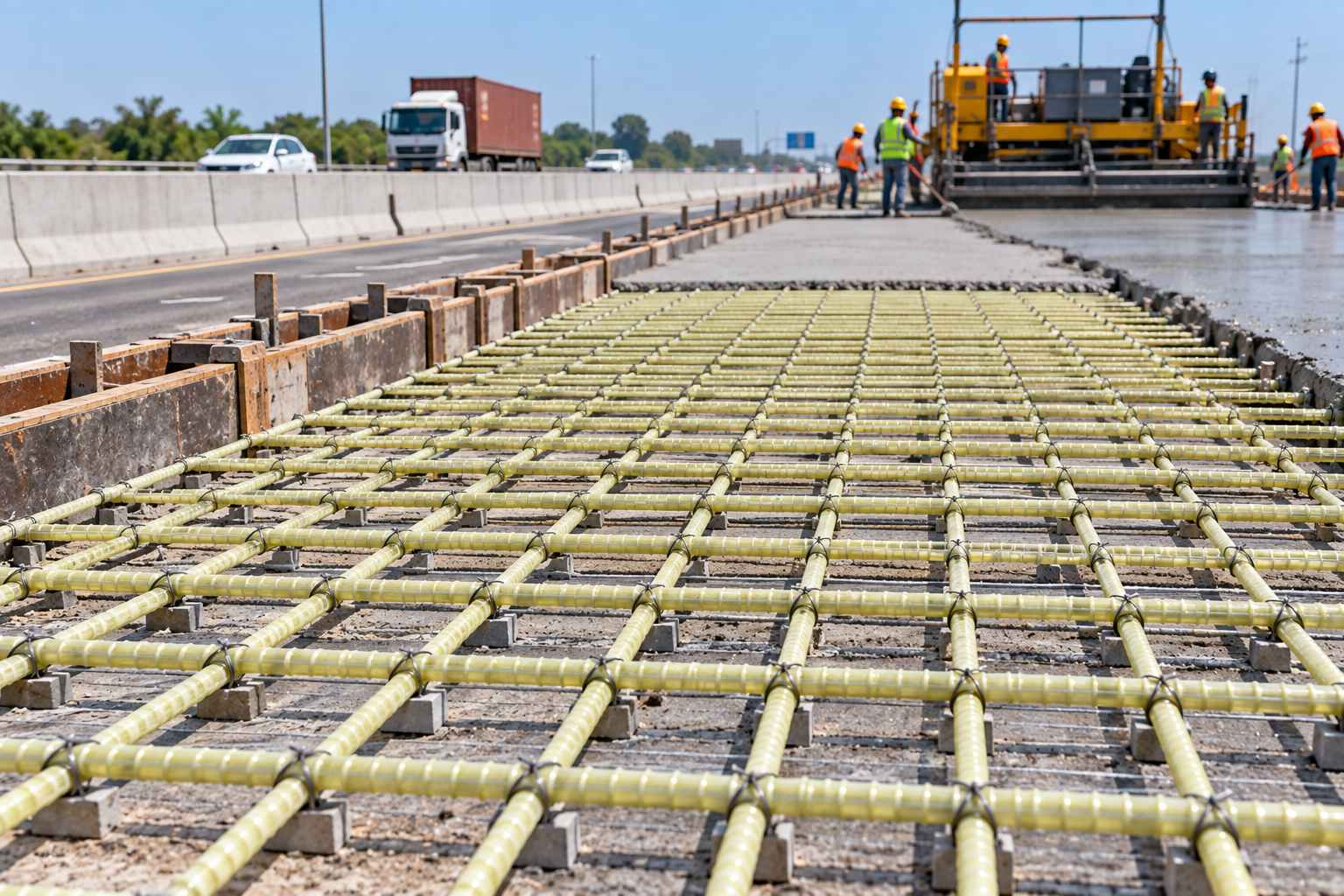
Roads & Highways
GFRP rebar is an effective reinforcement option for concrete road and highway applications exposed to moisture, salts and changing environmental conditions. Unlike steel reinforcement, it does not rust, helping reduce corrosion-related cracking and deterioration in reinforced concrete. Its lightweight construction makes transportation, placement and handling easier during infrastructure projects. It can be used in suitable pavement, barrier and roadway applications requiring durable, corrosion-resistant reinforcement.
- Corrosion Resistant: Performs well in exposed road environments.
- Durable: Supports longer-lasting concrete infrastructure.
- Lightweight: Easier to transport and position.
- Low Maintenance: Helps reduce corrosion-related repair requirements.
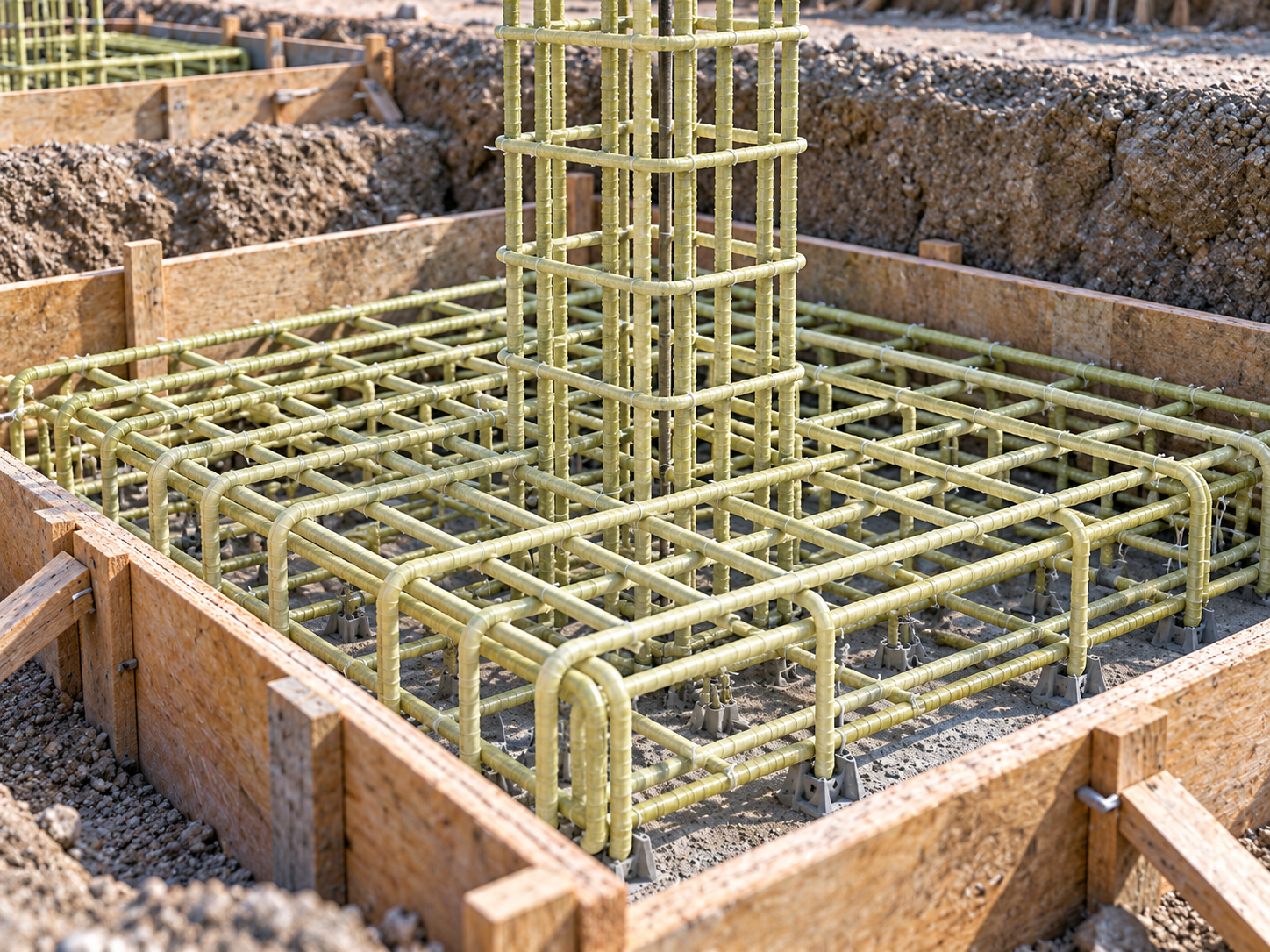
RCC Foundations
GFRP rebar provides corrosion-resistant reinforcement for concrete foundations exposed to groundwater, moisture, salts and aggressive soil conditions. Unlike steel reinforcement, it does not rust, helping reduce corrosion-related damage within reinforced concrete foundations. Its lightweight nature also makes transportation, positioning and installation easier during foundation construction. It is particularly useful for projects where durability and long-term resistance to environmental exposure are important.
- Corrosion Resistant: Suitable for moisture-prone foundations.
- Durable: Helps improve long-term concrete performance.
- Lightweight: Easier to move and position on site.
- Low Maintenance: Helps reduce corrosion-related maintenance.
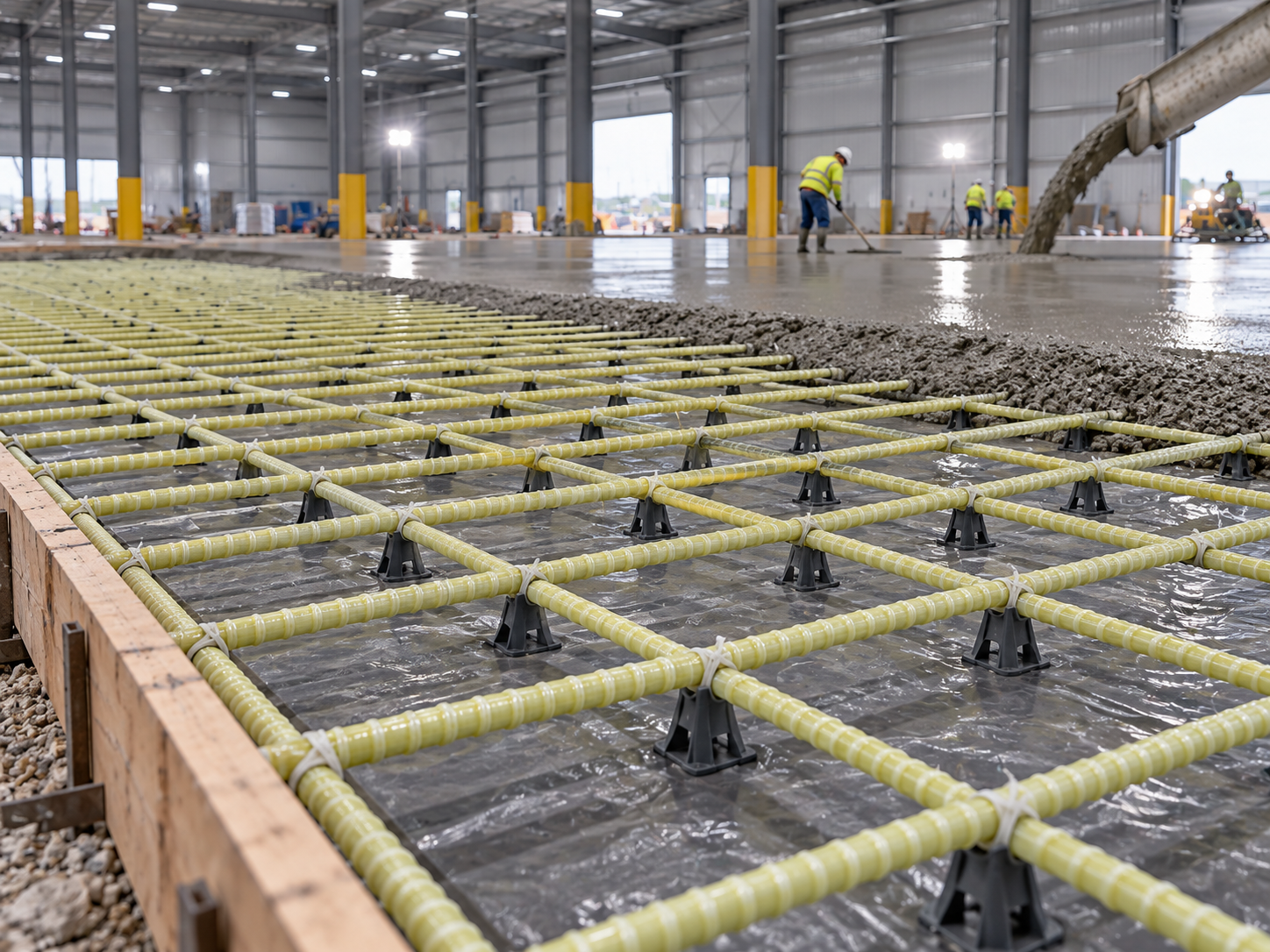
Industrial Flooring
GFRP rebar is a durable reinforcement option for industrial concrete flooring exposed to moisture, chemicals and demanding operating environments. Its non-corrosive properties help prevent reinforcement deterioration caused by water or aggressive substances commonly found in industrial facilities. The lightweight material can also simplify handling and placement during floor construction. It provides dependable reinforcement for warehouses, factories and selected industrial flooring applications requiring durability and corrosion resistance.
- Corrosion Resistant: Suitable for moisture-prone industrial areas.
- Chemical Resistant: Performs well in many aggressive environments.
- Lightweight: Easier to position during installation.
- Low Maintenance: Helps reduce reinforcement-related repairs.
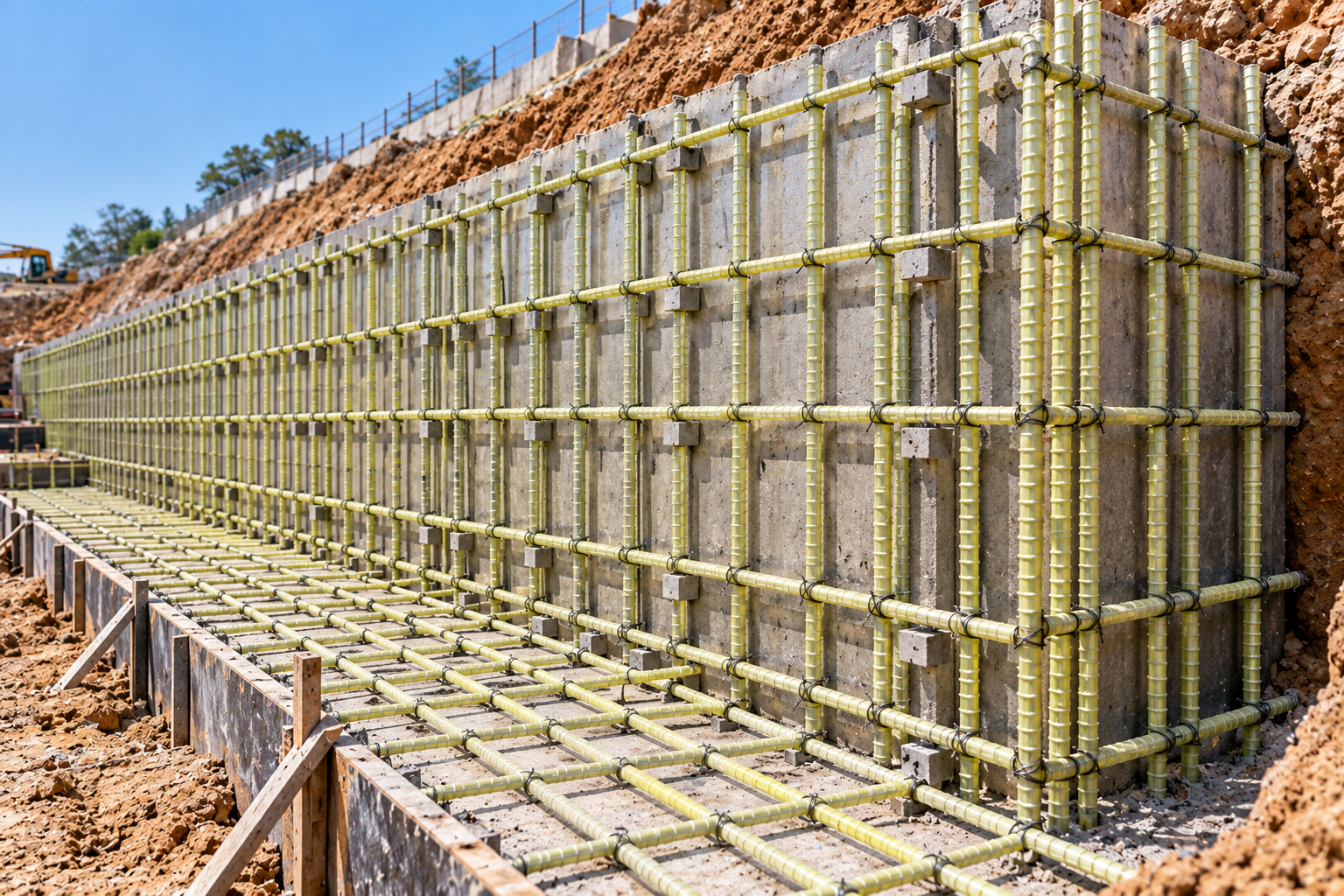
Retaining Walls
GFRP rebar is suitable for reinforced concrete retaining walls exposed to soil moisture, groundwater and aggressive environmental conditions. Its non-corrosive nature helps prevent reinforcement deterioration that can occur when conventional steel remains exposed to moisture over long periods. Its lightweight construction also makes transportation and installation easier during wall construction. It provides durable reinforcement for retaining structures where long-term resistance to corrosion and environmental exposure is required.
- Corrosion Resistant: Suitable for moisture and soil exposure.
- Long Service Life: Helps reduce reinforcement deterioration.
- Lightweight: Easier to handle and install.
- Low Maintenance: Helps reduce long-term repair requirements.